
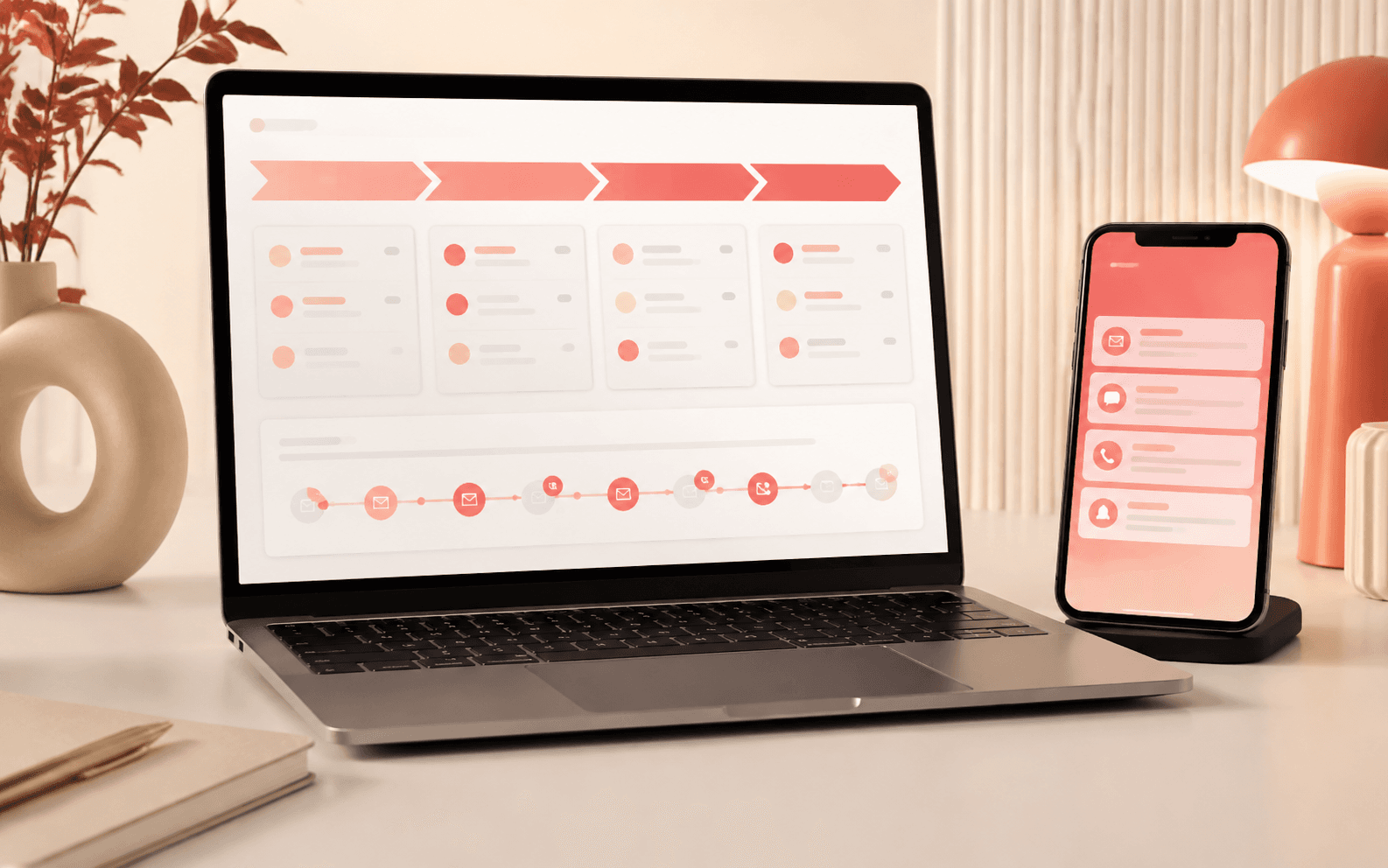
A lead is often lost because it lacks context, ownership or timely follow-up, not because it lacks interest.
Collect information that helps people act
Beyond name and email, the context of the request can help prioritise a response. Ask only for data the team will actually use.
Give each opportunity an owner and next step
Clear stages, owners and tasks connect forms, email, CRM and calendars. Automation removes grey areas without replacing sales judgement.
Measure quality and speed
Track time to first response, movement through stages, sources of strong opportunities and loss reasons. Marketing and sales can improve together from this view.
Ask for useful context without complicating first contact
A form should gather the information needed to respond and understand the request. The need, source and timing of a project can help prioritise a response, but excessive fields increase effort. Confirm the team uses each requested detail rather than collecting it out of habit.
Define how repeated contacts are recognised and how history attaches to the primary record. Avoid duplicate opportunities when one person submits a form and sends an email. The information should make it clear what has already been agreed and what needs to happen next.
Automate follow-up while retaining a clear owner
Assignment, task creation and alerts for unanswered contacts are useful first cases. Each rule needs an owner and an approach to exceptions. An automated message does not replace evaluation of the request or confirm that a sales conversation took place.
Define stages representing real events, such as first contact, a booked meeting or a sent proposal. Avoid changing stages simply because a timer expired. When ownership changes, record the context and pending action so the customer does not have to repeat information.
Review funnel quality and data consistency
Track time to first response, progress between stages and reasons for losses. Compare sources by opportunity quality rather than volume alone. Incomplete records or rules used differently by each person can make reports difficult to interpret.
Regularly review fields, tasks and automations with the people using the CRM. Simplify anything that does not support decisions and fix the places where follow-up gets lost. The goal is a process the team can maintain and a better experience for people contacting the company.
FAQ
Is a CRM only useful for large teams?
No. Small teams also benefit from centralised contacts, consistent follow-up and accessible context.
Which automations are useful first?
Lead assignment, unanswered-contact alerts and task creation after an enquiry are good starting points.