
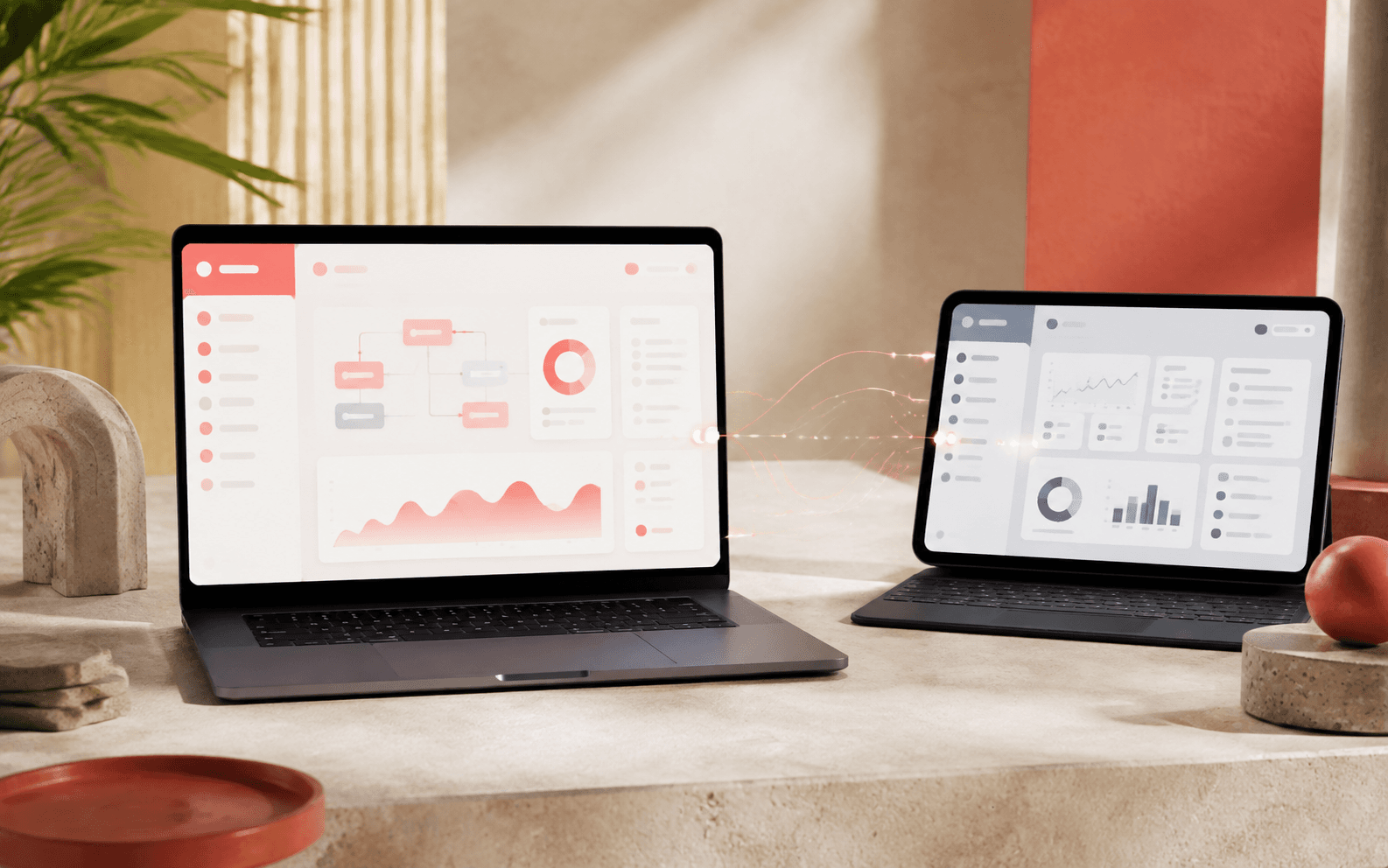
Not every business needs a custom application, but not every process fits inside a generic tool.
When off-the-shelf software is a good fit
If the need is common, mature products exist and the team can adapt without losing value, an existing tool may be faster and safer.
When custom development makes sense
Differentiated processes, complex permissions, multiple data sources or a specific customer experience can justify a tailored solution.
Start with discovery and a useful first release
Mapping users, tasks, data and integrations helps compare alternatives with business criteria. A focused first release reduces risk and validates adoption.
Compare alternatives against the same real process
Choose a representative workflow and test how each alternative would handle it. Include users, permissions, data and tasks currently requiring manual work. A feature list alone does not show whether the team can complete the process clearly and consistently.
Separate essential requirements from preferences. If an existing tool meets most needs without difficult workarounds, it may be a suitable starting point. If the workflow depends on your own rules or integrations the tool cannot support, investigate a more specific solution.
Define a first version people can actually use
A bespoke solution does not need to reproduce every company system in its first phase. Define a complete, useful journey including data input, permissions and a usable outcome. The aim is to validate the workflow with users rather than accumulate screens disconnected from operations.
Document what remains outside scope and how the solution might grow. A prototype helps people discuss tasks and language before development starts. Integrations, data migration and support after launch should be considered when defining the initial phase.
Include maintenance and ownership in the comparison
Compare licensing, setup, integrations, training and manual work over time. For bespoke software, include maintenance, hosting and evolution. The option with the lowest initial cost may require more operational effort or restrict future changes.
Define who maintains the solution, how data can be exported and what happens if you change suppliers. A hybrid approach may use existing software and build only the layer that differentiates your process. The decision should reflect the workflow, team resources and expected evolution.
FAQ
Is custom software always more expensive?
It depends on the ongoing cost of licences, workarounds and manual work an off-the-shelf tool would require.
Can we combine standard software and custom development?
Yes. Many businesses integrate existing tools with a custom layer for the processes that differentiate them.